
Reflections from Her Power UNGA80

I was privileged to join the Her Power event in New York City this year at the start of UNGA80, thanks to my Executive Director, who made sure I could be in the room. Foreign Policy brought together women leaders from government, business, civil society, academia to talk about power in practice and what it looks like when women are at the center of decisions about peace, security, research, and the economy.
Several speakers shared experiences from war-torn countries where women were included in peace negotiations. The message was clear, that there is a better chance for peace when women are at the table. Research from UN Women backs this up, showing that agreements are 35 percent more likely to last at least 15 years when women help shape them.
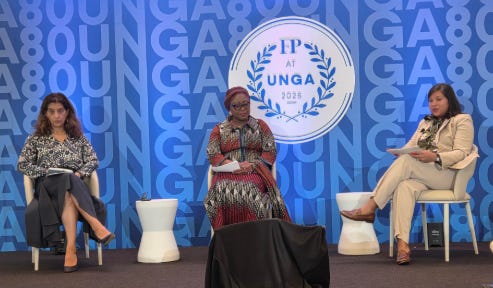
Another theme that hit me was the distinction between “economic mobility” and “economic empowerment,” and how mobility may set the bar too low. Empowerment means building women-led powerhouses, creating wealth at the same scale as men, and setting the rules instead of just playing by them. We shouldn’t be satisfied with achieving mobility with only small gains up the man-made ladder. Women should be growing their wealth and influence to match the scale of men’s so that real equality can come into focus.
The menopause panel (while I’m not quite to that point in life yet) was a highlight for me. It’s the only health issue that impacts every single woman, yet it’s one of the least researched and least funded. Women on the panel spoke candidly about brain fog and mood swings and how those symptoms collide with workplaces that offer little to no support. And it doesn’t just affect women. Men feel its impact too, through families, workplaces, and communities. Why isn’t something this universal treated like a top priority?
Beyond the panels, the women I met left just as big of an impression. We talked about everything from domestic violence and homelessness to fashion to women leaders throughout history (inspired by my current read, First Women: The Grace and power of America’s Modern First Ladies). The diversity of experiences and perspectives was powerful, and it reminded me that women’s leadership is never one-dimensional.
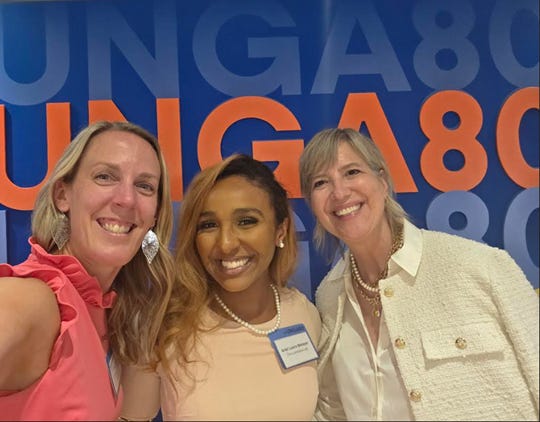
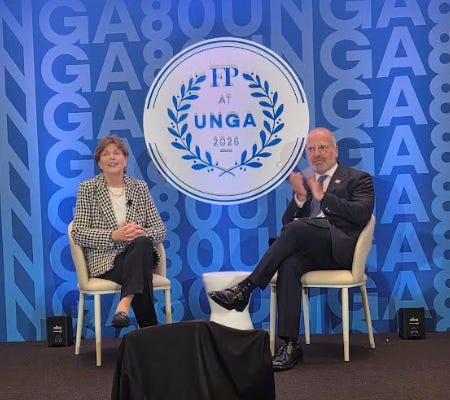
Her Power was a reminder that women’s engagement is not optional. It is essential to peace, prosperity, and progress. One of my favorite speakers, Senator Jeanne Shaheen who is a long-time advocate of women’s rights, brought that point home, grounding the big ideas of the day in concrete policy and practice. Walking away from the event, I felt grateful for the chance to be there and more convinced than ever that women cannot just participants in these conversations. We must be the drivers.
That message feels especially urgent back home in South Carolina. I serve on the board of the Women’s Rights and Empowerment Network, and right now our legislature is considering Senate Bill 323 (a bill that would abolish abortion entirely, even in cases of rape or fatal fetal diagnosis). It is a direct assault on health care and freedom. After listening to women from around the world talk about building peace and power, it’s clear to me that the fight for women’s equality begins right where we live.
I hope women and men alike will raise their voices against this dangerous law in South Carolina, and that people everywhere will keep pushing for women’s engagement and empowerment at every level of society.